Telegram sticker maker
Telegram Sticker Maker
Create Telegram-ready sticker packs with consistent characters, bold reactions, and clean compositions that hold up at chat size.
Quick Answer
A Telegram sticker maker should focus on one consistent character, simple framing, and strong emotion contrast across the pack. Telegram stickers are often viewed quickly in busy chats, so clear silhouettes and bold expressions matter more than tiny detail.
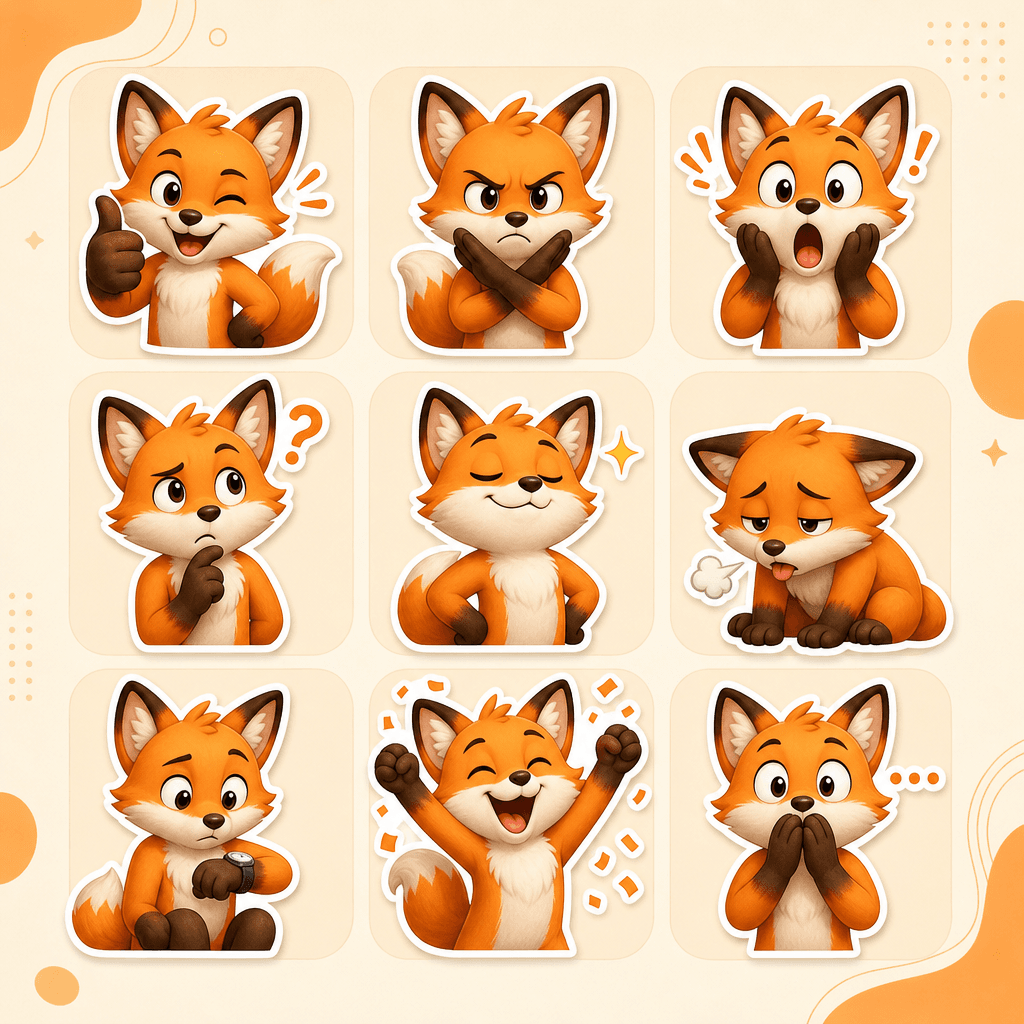
MakeImg can help you generate a sticker-style set from text or from a photo, then download the strongest panels for reuse. The most reliable packs keep the character centered, the background quiet, and the emotion easy to recognize without reading extra text.
Step-by-Step Tutorial
Treat Telegram stickers like a small visual language for repeated conversation moments.
- 1
Choose one subject for the full pack
Use a mascot, pet, avatar, or original character. Repetition makes the pack feel intentional and easier to remember.
- 2
Generate sticker-first composition
Ask for centered framing, clean edges, and limited background detail. Telegram stickers need quick readability more than scenic illustration.
- 3
Cover the most useful chat moments
Generate yes, no, wow, confused, proud, tired, waiting, celebrating, and speechless. Useful packs beat novelty-only packs.
- 4
Keep text out of the first pass
Small text is unreliable in AI images. Build the visual pack first, then add labels later only if you truly need them.
- 5
Check every panel at small size
If the emotion disappears when the sticker is small, strengthen the pose or expression and simplify the prompt.
Best Use Cases
Telegram sticker packs are useful for private groups, creator communities, paid channels, fandom spaces, and small international communities that reply often. A custom pack helps the group feel more distinct without requiring manual design work for every new joke.
They are also useful for recurring campaign characters. Once you have one stable mascot, you can keep expanding the pack with launch, holiday, or community-specific reactions.
Prompt Suggestions
Use prompts that clearly define format, subject, and emotional range.
- Create a Telegram sticker pack, cute original mascot, sticker style, centered character, simple background, emotions: yes, no, wow, confused, proud, tired, waiting, celebrating, speechless.
- Generate AI Telegram stickers from this photo, same subject in every panel, clean cutout look, readable emotions, no text, nine reactions.
- Make a reusable reaction sticker pack for Telegram, soft orange accents, rounded shapes, friendly expression range, simple chat-ready composition.
Quality Checklist Before You Generate
Meme quality is mostly about instant recognition. The subject should be readable before the viewer zooms in, and the emotion should be clear before any caption explains the joke. For a Telegram sticker maker workflow, start by deciding what success looks like before you press generate. The output may be attractive, but it still needs to solve the original task: clearer restoration, a stronger reaction, a more natural composition, or a cleaner edit.
Check the input first. Make sure the source image, prompt, style choice, and final format all point in the same direction. If you are using MakeImg Create, keep the instruction short enough for the model to follow and specific enough that it cannot ignore the main request.
- One clear subject or task is easier to control than several competing goals.
- Simple backgrounds usually improve readability and reduce unwanted artifacts.
- Consistent style words help the model keep the result cohesive across a full set.
- Download only after checking the result at the size where it will actually be used.
Common Mistakes to Avoid
The most common mistake is asking for too much: too many styles, too many props, too many characters, or too much text inside the image. A meme pack becomes more useful when every panel has one job. This matters for SEO-style tutorial workflows too: people searching for Telegram sticker maker usually want a usable result quickly, not a complex art experiment that needs many manual fixes afterward.
Before downloading, look at the full grid and ask whether each panel would work as a standalone reaction in a fast chat. If the answer is unclear, simplify the background and make the emotion stronger. If the first result is close but not ready, change one variable at a time. Edit the emotion list, simplify the style, clarify the reference roles, or narrow the edit instruction. Changing everything at once makes it hard to learn what improved the output.
Keep the original file and the generated result separate. That gives you a clean rollback point, makes comparison easier, and helps you regenerate later if you find a better prompt or model provider.
Publishing and Reuse Notes
After the output is ready, name the file in a way that matches the task, such as telegram-sticker-maker. Clear filenames make it easier to find the asset later, especially when you are testing several MakeImg workflows in the same week.
If you plan to publish the image publicly, review rights, privacy, and context before posting. Use source material you own or have permission to use, avoid misleading claims, and keep a copy of the prompt so you can explain or reproduce the creative process later.
- Save the final image and the source image in the same project folder.
- Keep a short note with the prompt, style, and tool path used for generation.
- Recheck the output on mobile because most meme and social images are consumed there.
FAQ
Common Telegram sticker questions.
Should the pack start with nine stickers?
Nine is a practical starting point because it gives range without making review and selection too slow.
Do Telegram stickers need transparent backgrounds?
A transparent-style cutout is useful, but the bigger priority is a clean silhouette and strong subject contrast.
Can I use a real photo as the source?
Yes, if you own the photo or have permission to use it. Clear source images usually produce better results.
Create with MakeImg
Use this guide as a starting point, then try the matching MakeImg tool to generate, restore, compose, or edit your own images.
Open the tool